

The Nisaba Manifesto
and The Courage to Innovate

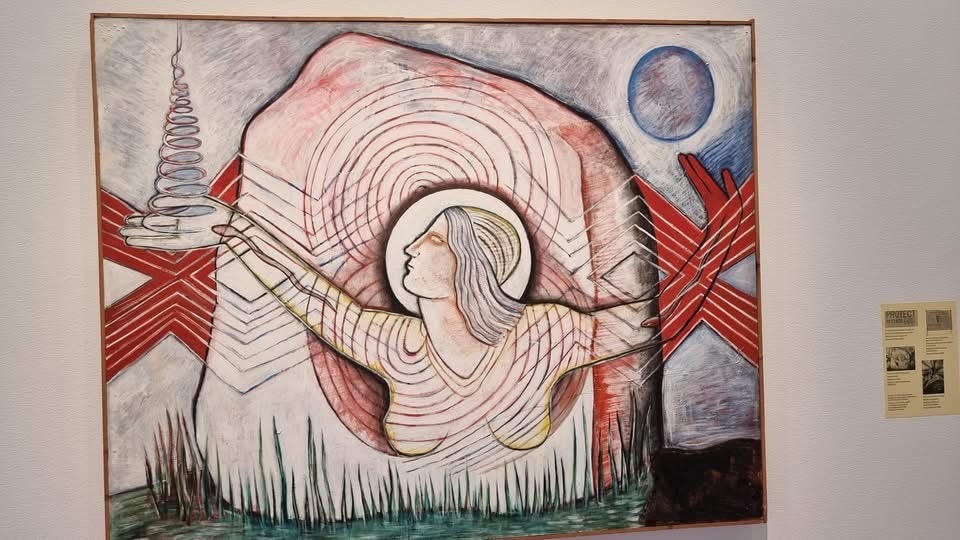
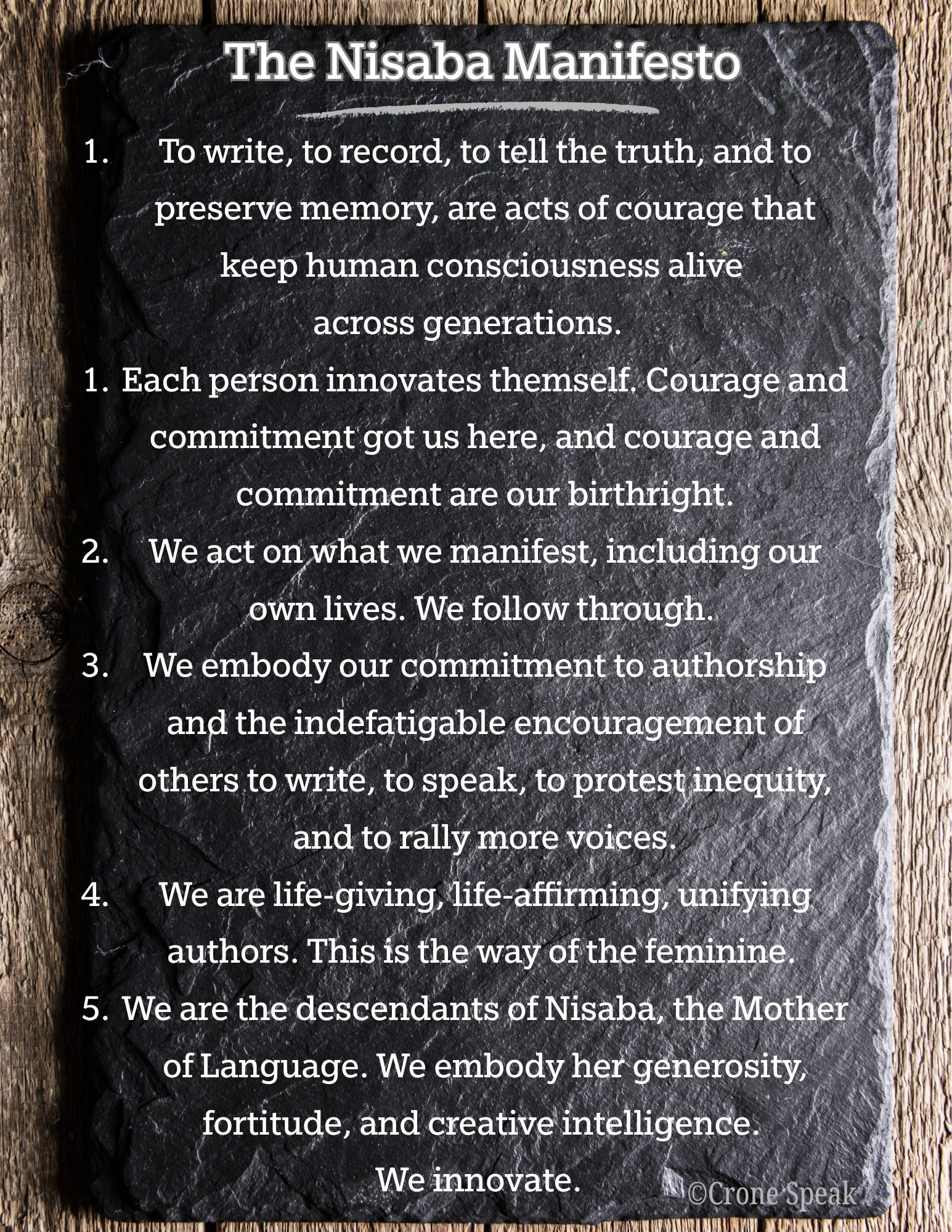
Nisaba’s story matters now because innovation is not only technological; it is existential, ancestral, and communal. To write, to record, to tell the truth, and to preserve memory are acts of courage that keep human consciousness alive across generations.
Nisaba, the innovator of writing, record keeping, documentation, and communication, did what no one had ever done before. This is the definition of courage. Where does this courage come from? In the energy medicine lineage in which I am trained, and in what I know about embryogenesis, courage is innate to everyone.
It takes enormous courage to incarnate, to unfold, and to move through the complex channels of the birth canal into life outside the womb. Courage got us here. Each person innovates themself. But many of us suppress that courage to be accepted, and in doing so we become enmeshed in the commonplace. Nisaba’s manifesto is the reclamation of origination.
It is the conscious, awakened decision to follow through with the being-ness we have already manifested. We elected to be here, and now we are called upon to fulfill the promise we made to ourselves. That is what Nisaba did when she invented writing. That is the definition of manifesto: act on that which we manifest.
When I first encountered Nisaba through the writings of the brilliant Turkish author Elif Shafak, I was electrified with recognition. My blood lineage of women who could not find a way to deliver their gifts to the world, who were crippled by the shock of immigration and the genocide of their people, by economic hardship and relational betrayal, haunted me.
In Nisaba, I found another lineage: fierce determination, the motivation to overcome, commitment to authorship, and the indefatigable encouragement of others to write, to speak, to protest inequity, and to rally more voices. This is my tribe. Since then, I have devoted hours every day to unearthing everything I can find about Nisaba and her sisters, her legacy, her expression, her life, and the abundant fruits of her imperative.
Nisaba, the Mother of Language in ancient Mesopotamia, gave her life to literacy, continuity, and the artful recording of history’s great stories for future generations. She wove humanity together with threads of sentences and phrases, paragraphs, poems, and hymns. She made us one. She joined the past with the present and the future. She gave us the stories of the human family that we understand across time, stories that uplift us and remind us of the enduring human will to articulate, to invent language that is true to expression, to make art, and to create.
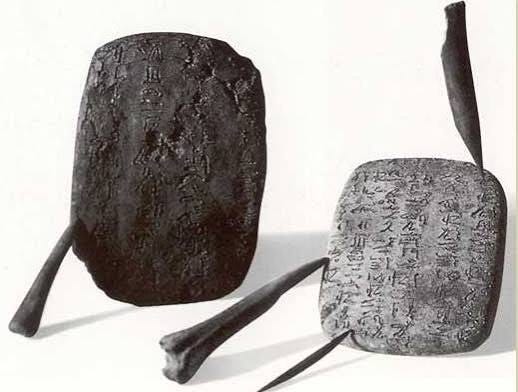
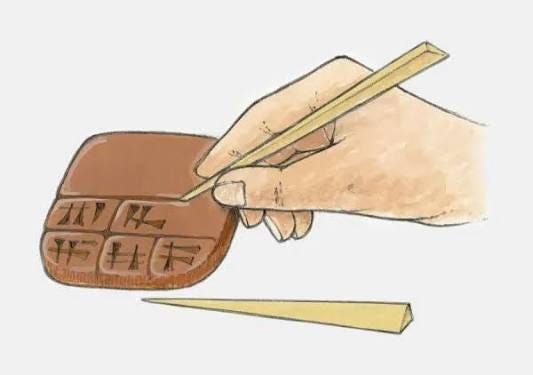
Nisaba knit beauty and truth together, shaping both the tablets that were the ancient books and the tools used to carve words into them. She created the words themselves and the artistry of their phrasing. The stylus she designed was described as a serpent entering the soft, wet, alkaline clay of Mother Earth, suggesting consummation and procreation. Nisaba conceived what had never been imagined, giving birth to universal literacy, libraries, hymnals, poetry collections, and books. Through her innovations, history and journalism came into being. All Nisaba’s creations are life-giving and unifying. This is the way of the feminine.
The Nisaba Manifesto says that everyone has the right, the power, the support and the duty to act on their Original Brilliance. The truth must breathe through the vehicle of human expression. For Nisaba, that expression is language. It is articulation, publication, communication. This is Nisaba’s realm, and mine, and her manifesto is to claim it and proclaim it unequivocally.
Nisaba defies anyone or anything that is counter to truth telling, to reporting, revealing, to advocating, to documenting, to sharing wisdom, to connecting humans everywhere through our shared language. She defies secrecy, propriety, subterfuge, elitism, and literary obscurity. She is a woman of the people.
Hymns that scribes sang to praise Nisaba were preserved in the great library of King Ashurbanipal, even as later patriarchal systems diminished her visibility. But the tablets cannot be denied. King Ashurbanipal would not destroy them because they were sacred lineage, the undeniable record of his own history. Today we see how patriarchal government tries to change history, but that will never succeed. Memory is engraved in consciousness like the inscriptions on the indestructible clay tablets that have survived war, floods, violence, and environmental disaster. The tablets are evidence, the testimony of feminine leadership. They give credence to Nisaba’s Manifesto of Courage.
Hymn to Nisaba
Nisaba, you are a glorious dragon.
You are our birth goddess.
You set words onto clay.
You make grains flourish.
You provide food in plenty for the people.
You have built abundance for the people.
You have built the house of learning,
The House of the Scribes
Where you consult the lapis lazuli tablet,
The wisdom from the stars of heaven.
It is sweet for us to praise you, Nisaba,
Goddess of Scribes,
Great is your name.
What Crone Speak proclaims is not merely myth. It is grounded in historical traces that were silenced and are now being reconsidered through archaeological findings and the discovery of the tablets that Nisaba created and inspired. Crone Speak proclaims Nisaba’s leadership. I put all my weight behind rocking the boat of subterfuge and deceit. The emperor has no clothes on, and he ridicules himself with his ignorance. Nisaba is pure articulation, honesty, truth, and transparency. Great is her name.
Crone Speak honors the legacy of Nisaba and the women who came after her, schooled in her Edubba— like Ninisina, the first physician, and Enheduanna, the first poet and author. Not only that; we continue and upgrade her legacy. Inherent in the story of Nisaba is the sisterhood of the truth-bearers. Nisaba initiated writing, but once the flame of literacy, articulation, proclamation and truth-telling was lit, it spread like wildfire. Women, the first teachers and the first scribes of the Edubba or Temples of Lapis Lazuli where writing and inscription were taught, are the leaders of the tribe of the writers, the authors, the messengers, the troubadours, the bards who are irresistible. It is impossible to shut out our voices.
You can contribute to this uprising by becoming a paid subscriber to Crone Speak, where Nisaba is being resurrected. It takes time and diligence to research her, so thoroughly was her story suppressed. But we are doing it here, on these pages. In addition, financial contributions to this effort are profoundly needed. You can donate at www.Tara-Approach.org/donate. The TARA Approach, founded by Crone Speak author Stephanie Mines, is a nonprofit (501.c.3) organization. Your donation is fully tax deductible.
Help Nisaba bring her glorious presence into this time. Let her infuse you with her unstoppable inspiration, focus and fortitude. I dedicate the ways that I champion Nisaba and her lineage to my granddaughters. I want them to claim their inheritance of courage, innovation, insight, and transmission. It is a transgression to hide this wealth from them.
Though we are surrounded in our world today by a multitude of confusions and distortions, we must not overlook the joyous discoveries, like that of Nisaba, that are simultaneously bubbling up from the core of the earth and streaming down from the heavens towards us.
I, for one, welcome every invitation to articulate what I believe. I make this my highest priority. It takes everything I have to not be pulled into despair by what is going on around me, but I will not allow myself to be weakened and discouraged. That is why I dive into this scant research, digging as deep as I can to find the treasures that Nisaba has stored for safekeeping so that we can find our way back to her.
If you are uplifted by learning about Nisaba, if you are curious to learn more, to feel the power of her lineage, and to bring your writing to others who want you to express yourself even more and to hone your craft, you are heartily invited to join Writing Like a Medicine Woman. Be part of a vibrant, respectful cohort of women determined to frame their insights exquisitely and share them with the world. You do not have to write about Nisaba specifically to praise her. By bringing your own personal wisdom stream into manifestation, you recognize her, you become part of her lineage.
NB: Hymn to Nisaba drawn from Fiona Collins & June Peters, Classic Tales of Babylon & Sumer. I have taken the liberty of refining their translation.
Praise for CRONE SPEAK
“These posts fill me with supportive potency. The stories of women living and rising through these times uplifts me. The Nisaba posts relate strongly to my creative focus on writing and with clay. Thank you.” ~Renya Creations

